Recreational / Swim Ponds
Recreation / Swim Ponds
Servicing The Surrounding Areas of…
Twin Cities, Minneapolis, St. Paul, Minnesota-MN



What Is A
Recreational Pond
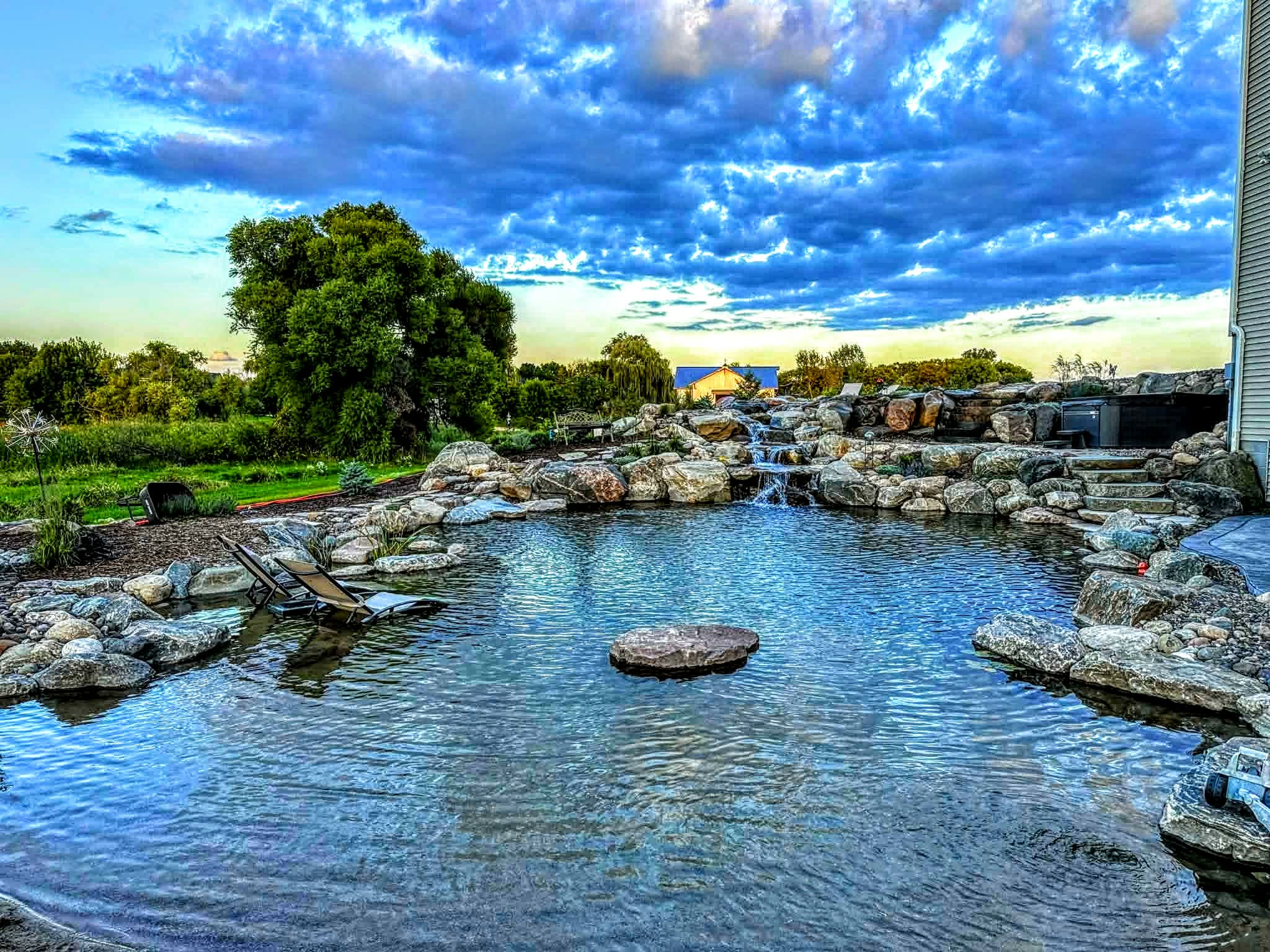
A recreational pond is a naturally balanced body of water designed for both beauty and enjoyment, including swimming, floating, and paddling. These ponds are built to mirror nature itself, with organic shapes, flowing waterfalls, strategically placed boulders, and hand-selected stone that feels as though it has always belonged there.
Aquatic plants are thoughtfully integrated throughout the ecosystem and play a vital role in natural filtration. Plants are heavily concentrated within the wetland filter, which serves as the pond’s biological engine. This is where beneficial bacteria thrive, helping keep the water clear, healthy, and balanced without the use of harsh chemicals.
Swimming areas are typically designed between 6′ and 8′ deep, though they can be shallower or deeper depending on your goals, family needs, and how you plan to use the space. Every pond is customized, whether the priority is swimming, relaxation, wildlife interaction, or a blend of all three.

What Is A
Recreational Pond
A recreational pond is a naturally balanced body of water designed for both beauty and enjoyment, including swimming, floating, and paddling. These ponds are built to mirror nature itself, with organic shapes, flowing waterfalls, strategically placed boulders, and hand-selected stone that feels as though it has always belonged there.
Aquatic plants are thoughtfully integrated throughout the ecosystem and play a vital role in natural filtration. Plants are heavily concentrated within the wetland filter, which serves as the pond’s biological engine. This is where beneficial bacteria thrive, helping keep the water clear, healthy, and balanced without the use of harsh chemicals.
Swimming areas are typically designed between 6′ and 8′ deep, though they can be shallower or deeper depending on your goals, family needs, and how you plan to use the space. Every pond is customized, whether the priority is swimming, relaxation, wildlife interaction, or a blend of all three.
A recreational pond gives you the best of both worlds. It is a stunning landscape feature for your Twin Cities, Minneapolis, St. Paul Areas of Minnesota-MN backyard, and a place where your family can swim, explore, and connect with nature right outside your door.
Many families are choosing recreational ponds over traditional swimming pools. Naturally filtered by plants and beneficial bacteria, these ecosystems eliminate the need for chlorine and typically require less hands-on maintenance than a pool. Fish are commonly included as part of the balanced ecosystem and are recommended for long-term water health, though ponds can also be designed without fish if preferred.
A Recreational Pond Is
Cleaner Than You Might Think
A waterfall will help keep your pond water fresh and clean
It’s natural to assume that a pond without chemicals couldn’t possibly stay clean, especially if you’re used to swimming pools. In reality, a properly designed recreational pond stays clear and healthy by working with nature rather than fighting it.
Water movement is a major factor. Waterfalls, circulation jets, and thoughtfully designed plumbing help move water throughout the entire pond, including deeper areas. This constant circulation keeps the system oxygenated and supports overall water quality while preventing stagnant zones.
Our recreational ponds also incorporate a wetland filtration system, which serves as the biological heart of the pond. This planted filter area slows the water, allows fine particles to settle, and provides an ideal environment for beneficial bacteria to thrive. As water moves through the wetland filter, it is naturally polished before returning to the main pond.
An Intake Bay paired with Aquascape external pumps further supports clarity and ease of maintenance. The Intake Bay uses surface tension to draw in leaves and floating debris, collecting them in a dedicated area where they can be easily removed by hand or net. This helps keep organic material from breaking down in the pond and simplifies routine care.
Aquatic plants are thoughtfully integrated throughout the system and play an important role in nutrient balance. Beneath the water, stone and gravel provide additional surface area where beneficial bacteria can colonize and support the pond’s biological processes.
To further support balance and consistency, we typically use Aquascape Beneficial Bacteria, often administered through an automatic dosing system. In some designs, an IonGen system may also be incorporated to support clear water as part of the overall ecosystem approach.
When all of these elements work together, the result is a clean, comfortable swimming environment that feels natural, smells fresh, and is maintained without chlorine or harsh chemicals.
How to Maintain
A Recreational Pond
Recreational ponds are designed to work with nature and typically require less day-to-day maintenance than a traditional swimming pool. Instead of managing chemicals, care focuses on circulation, filtration, and supporting a healthy ecosystem.
Because water is constantly moving through waterfalls, jets, and filtration systems, recreational ponds do not behave like stagnant water. This circulation helps prevent areas where mosquitoes can lay eggs and keeps the system fresh and oxygenated.
Routine care is similar to tending a garden. This includes skimming surface debris before swimming, managing plant growth, and occasionally removing leaves or organic material from the Intake Bay. Controlling decomposing organic matter before it breaks down is one of the most important factors in maintaining clear water.
A small amount of algae is normal and healthy in any natural system. The goal is clear, swimmable water where you can see all the way to the bottom, much like the cleanest Minnesota lakes.

Larger recreational ponds take time to mature. We typically see these systems take up to two years to find their long-term balance, compared to about six months for a standard koi pond. During this period, proper circulation and routine care help the ecosystem settle in naturally.
Many ponds are designed with enough filtration and water movement to avoid annual draining, though some designs or usage patterns may benefit from a spring cleanout. Automatic dosing systems, beneficial bacteria, and strong circulation help keep maintenance straightforward, even with swimmers, pets, and wildlife.
Fall preparation usually includes managing leaves, disconnecting and draining external pumps, and installing a de-icer and aerator for winter. In Minnesota, proper electrical installation, including a grounding grid around the pond, is required and handled by a licensed electrician.
When designed correctly, a recreational pond becomes an enjoyable, manageable feature rather than a constant project.
A Recreational Pond
What Does It Cost?
Recreational ponds are a significant investment, and it’s important to understand both the upfront cost and the long-term ownership picture before moving forward.
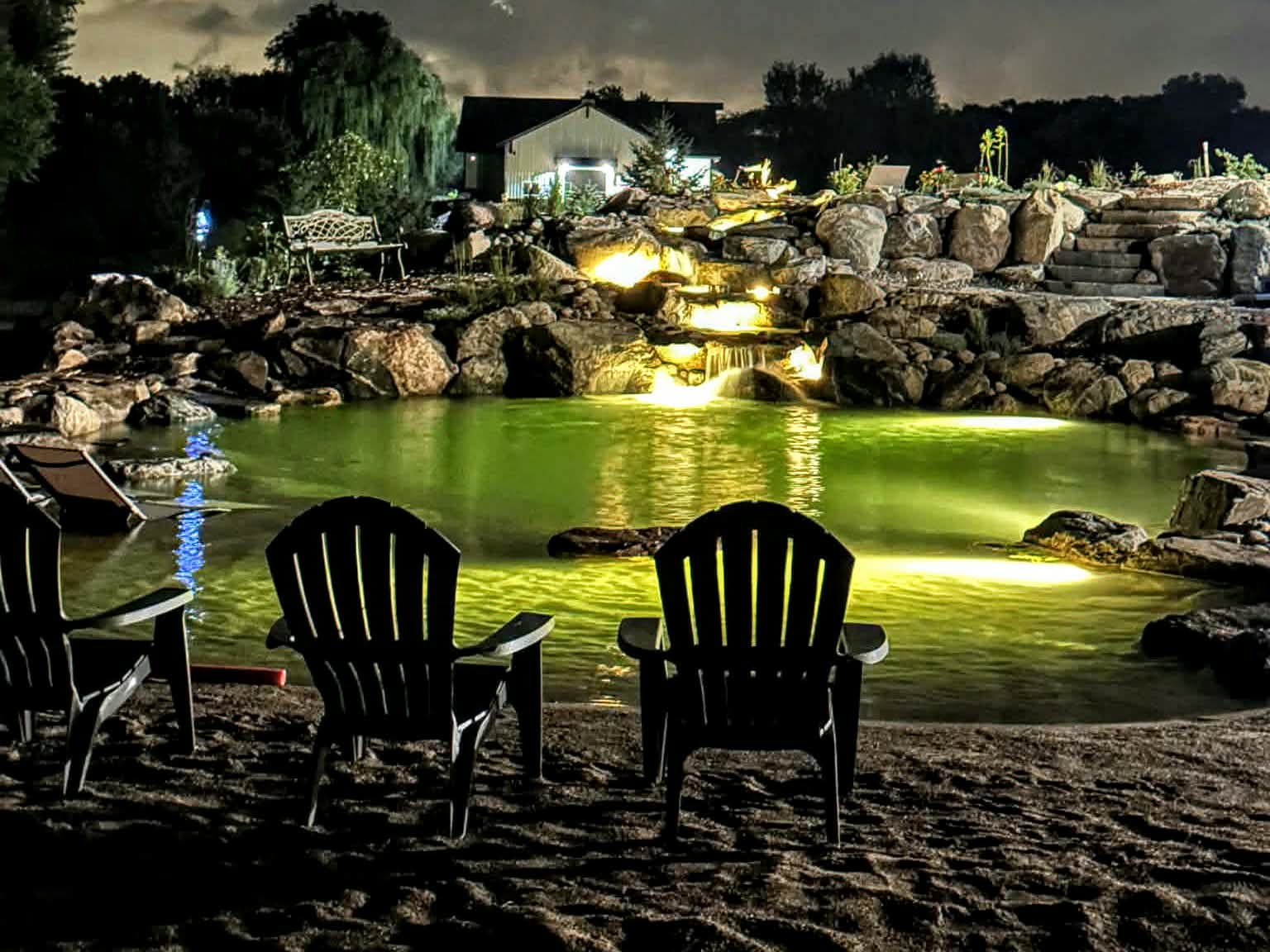
Today, professionally designed and built recreational ponds typically start around $150,000, with pricing increasing based on size, depth, stone selection, filtration systems, site conditions, and overall design complexity. Large-scale or highly customized projects can extend well beyond that, with some truly extravagant designs reaching into the hundreds of thousands or even millions when budget is not a limiting factor.
A Recreational Pond
What Does It Cost?
Recreational ponds are a significant investment, and it’s important to understand both the upfront cost and the long-term ownership picture before moving forward.
Today, professionally designed and built recreational ponds typically start around $150,000, with pricing increasing based on size, depth, stone selection, filtration systems, site conditions, and overall design complexity. Large-scale or highly customized projects can extend well beyond that, with some truly extravagant designs reaching into the hundreds of thousands or even millions when budget is not a limiting factor.
While the initial investment is often higher than a traditional swimming pool, many homeowners find that recreational ponds are comparable or even less demanding to maintain over time. These systems do not rely on constant chemical balancing, do not require heating, and are built around natural filtration, circulation, and biology rather than consumables.
Recreational ponds also tend to offer a longer usable season in Minnesota. We typically open ponds in April and shut them down in November, compared to a much shorter swimming pool season. Even outside of swimming months, the pond remains a visual and functional landscape feature rather than a covered or dormant space.
Maintenance costs vary depending on usage, environment, and design, but many owners appreciate not dealing with recurring liner replacements, frequent water testing, or ongoing chemical purchases common with pools. While no natural system is maintenance-free, recreational ponds are designed to age gracefully and operate as a living ecosystem rather than a mechanical vessel.
Ultimately, the cost of a recreational pond reflects more than just a place to swim. It’s an immersive landscape feature, a biological system, and a long-term investment in how you experience your outdoor space throughout much of the year.
Why
Recreational Ponds Are Trending?
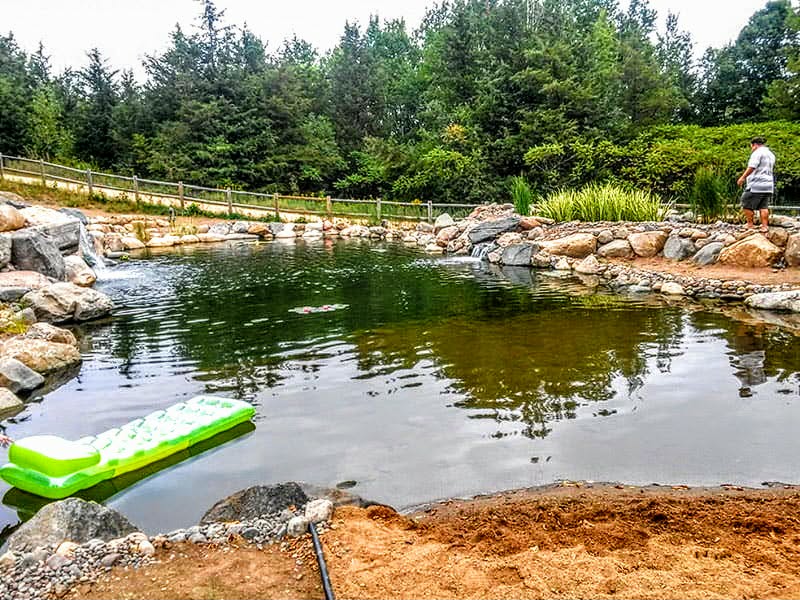
Recreational ponds are gaining momentum across North America as more homeowners look for alternatives to traditional swimming pools that feel natural, immersive, and environmentally responsible. While this approach to swimming is still emerging here, recreational ponds have been popular in Europe since the 1980s, where natural swimming environments are widely accepted and trusted.
One of the biggest drivers behind this trend is a growing desire for outdoor spaces that work with nature rather than against it. Recreational ponds rely on biological processes, water movement, and natural filtration instead of chlorine and harsh chemicals. For many families, that shift alone is a major draw.
There is also a strong lifestyle component. Recreational ponds function as more than just a place to swim. They are living landscape features that attract birds, pollinators, and wildlife, provide visual beauty year-round, and encourage a deeper connection to nature. In the Twin Cities, Minneapolis, St. Paul Areas of Minnesota-MN, this approach resonates with homeowners who value sustainability, aesthetics, and outdoor living.
At the core of these systems is wetland, or biological, filtration. Wetland filters slow and polish the water while providing an ideal environment for beneficial bacteria and aquatic plants to thrive. Systems such as Aquascape’s wetland filtration are designed to support clear, swimmable water without relying on traditional pool chemicals, making them well suited for natural swimming environments.
As awareness grows and more people experience how well these ecosystems function, recreational ponds continue to gain traction as a beautiful, functional, and forward-thinking alternative to conventional pools.