A Homeowner’s Guide from Pond King Water Gardens in Minnesota
The pond nitrogen cycle is the essential, natural process that converts toxic fish waste (ammonia) and decaying organic matter into harmless compounds (nitrate and nitrogen gas). It is the backbone of a clear, healthy pond, relying on beneficial bacteria to manage everything from dead leaves to fertilizer runoff.
A beautiful pond looks simple on the surface, yet under the water a complex natural system is working every moment of the day. This cycle is the process that manages fish waste, leaves, dead insects, fertilizer runoff, and every other piece of organic material that enters your pond.
When the nitrogen cycle is in balance, your water stays clear, your fish remain healthy, and your pond becomes easier to care for. If you have ever wondered why we recommend beneficial bacteria, aquatic plants, good filtration, and seasonal cleanings, it all connects back to this cycle. Understanding how it works will help you make better decisions and avoid problems before they start.

What Is the Nitrogen Cycle?
The nitrogen cycle is nature’s way of recycling waste so it becomes less harmful. When organic material enters a pond, it begins to break down and release nitrogen-based compounds. Some of these compounds are dangerous to fish and need to be transformed into safer forms.
The nitrogen cycle converts these toxic compounds in stages until they are no longer harmful. Each stage of the cycle depends on living organisms, especially bacteria.
You can think of the nitrogen cycle as a loop. Waste enters the pond. Bacteria transform it. Plants use some of it as food. Other bacteria finish the job. The end result is a pond that can handle new waste without turning cloudy or unsafe for fish.
The Starting Point: Ammonia
Every pond produces waste. Fish release waste every day. Uneaten fish food sinks and decomposes. Leaves and grass clippings blow into the water. Algae dies off. Fertilizer from nearby lawns can wash into the pond during storms.
As all of this organic matter breaks down, it produces ammonia.
Ammonia is very toxic to fish. Even at low levels it can stress fish, irritate their gills, and make it harder for them to take in oxygen. At higher levels it can quickly kill fish and ruin water quality. This is the point where beneficial bacteria become critical.
Beneficial Bacteria: Converting Ammonia to Nitrate
Beneficial bacteria are the heart of a healthy pond. They are the main workers in the pond nitrogen cycle. These bacteria live on surfaces that hold water and oxygen. You will find them on rocks, gravel, biological filter media, and everywhere water flows through your system.
These bacteria perform a step-by-step conversion called nitrification:
- They convert toxic ammonia into nitrite (also toxic to fish).
- They then convert nitrite into nitrate (far less harmful).
Without these bacteria, the cycle cannot function, and the pond quickly becomes a dangerous place for fish.
How Oxygen Supports the Cycle
Because these bacteria rely on oxygen, circulation matters. Your pump, biological filter, and waterfall do more than move water. They also help maintain dissolved oxygen levels, which allows bacteria to thrive and do their job. If water stops moving and oxygen levels drop, nitrification slows or even stalls, and ammonia and nitrite can climb.
How Often to Add Beneficial Bacteria?
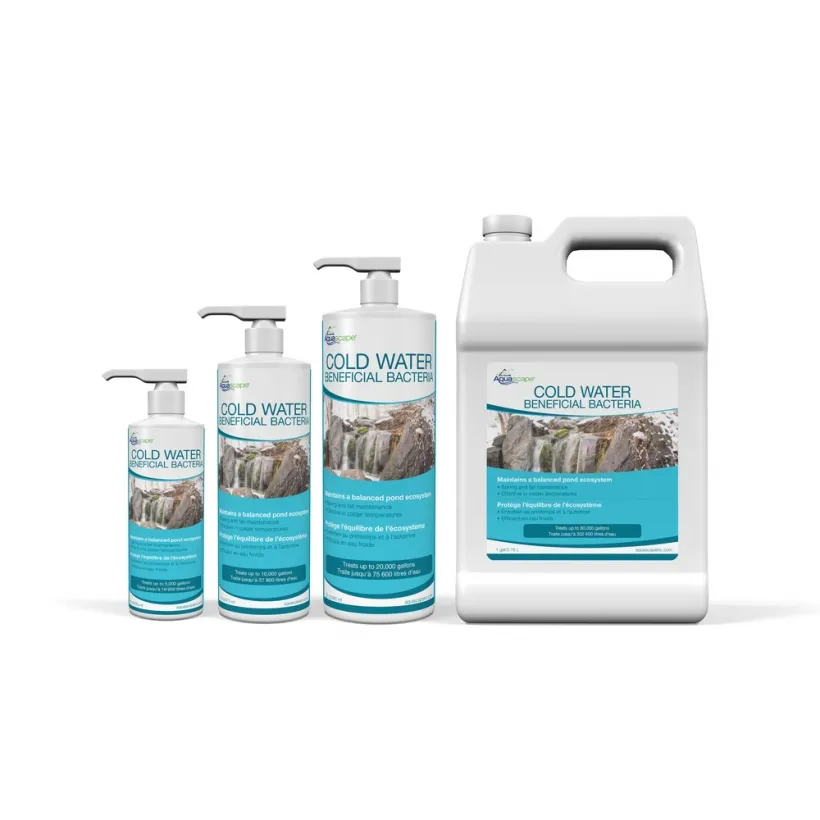
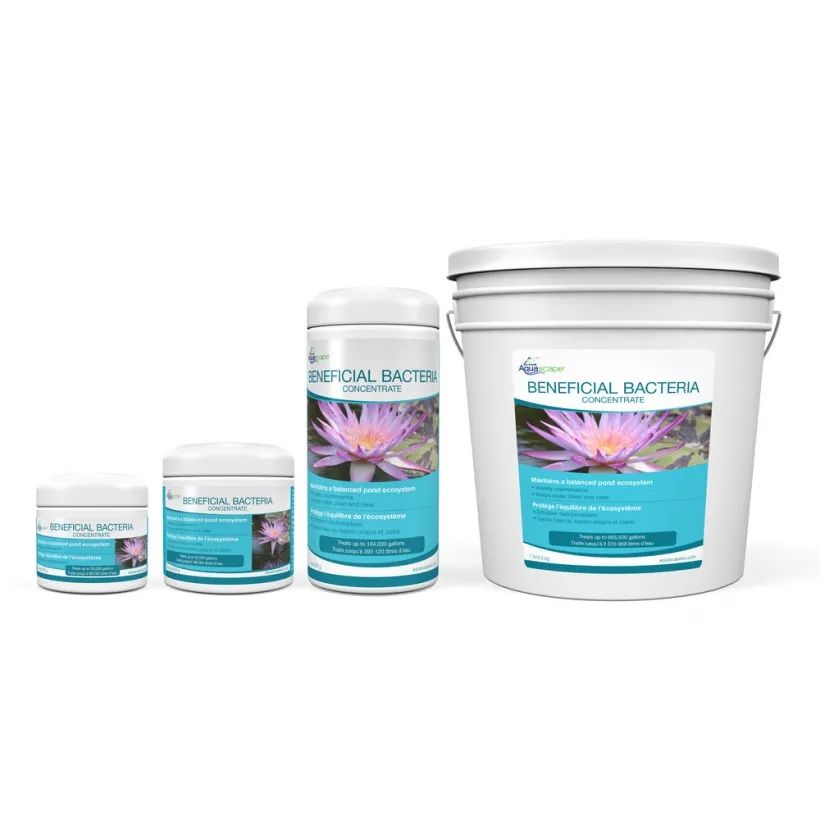
Here in Minnesota, we deal with long winters and big temperature swings. Cold water slows bacterial activity, but it does not stop it completely. To keep the system supported all year, we use two main types of Aquascape bacteria:
-
Aquascape cold water beneficial bacteria for cooler water, typically under about 50 degrees Fahrenheit.
-
Aquascape regular beneficial bacteria for ponds as the water warms.
We recommend adding beneficial bacteria weekly throughout the season, and continuing with cold water bacteria into the colder months. In early spring, a heavier dose helps the pond handle the surge of organic material that enters the water as ice and snow melt.

Plants Support the Cycle, But Do Not Replace Bacteria
Aquatic plants play a helpful supporting role. As they grow, they use nitrate as a nutrient, just like garden plants use fertilizer in soil. By using nitrate, they reduce the amount of nutrients available for algae and help stabilize the pond.
Floating plants, submerged plants, and marginal plants all participate in this process to different degrees. In a mature pond with good plant coverage, this support can make a noticeable difference in water clarity and algae control.
However, plants are not the primary cleanup crew. If plant material dies back and is left in the pond, it will eventually decay and turn back into ammonia, restarting the cycle. For that reason, we encourage customers to think of plants as a valuable partner to the bacteria, not as a replacement. Healthy plants plus strong bacterial populations give the best results.
Completing the Cycle: From Nitrate Back to the Air
Once nitrate is present in the water, several things can happen:
-
Some nitrate is taken up by aquatic plants.
-
Some nitrate is removed when you do partial water changes or during a spring cleanout.
-
In certain low-oxygen zones, specialized bacteria can convert nitrate into nitrogen gas.
That last step is called denitrification. They transform nitrate into nitrogen gas, which simply bubbles out of the water and returns to the atmosphere. At this point, the nitrogen has completed a full cycle.
What Can Disrupt the Pond Nitrogen Cycle?
When more waste enters the pond than the system can handle, problems follow. Common triggers include:
-
Heavy rainstorms: Storms wash fertilizer into the pond and can lead to an algae bloom. Adding beneficial bacteria immediately after a storm helps the system keep up.
-
Overfeeding fish: Extra food sinks and becomes waste, which turns into ammonia. Fish should finish what you feed them in a few minutes.
-
Leaf buildup and debris: Leaves, seed pods, and grass clippings break down into ammonia. A good skimmer, regular netting of the surface, and leaf nets in the fall all protect the cycle.
-
Fertilizer runoff: Fertilizer contains nitrogen and phosphorus. Avoid fertilizing right up to the pond edge.
The Minnesota Factor and Spring Cleaning
Ponds in Minnesota face unique stresses. Cold winters slow down bacteria, plants go dormant, and organic material can accumulate under the ice where you cannot see it. When spring arrives and everything thaws at once, that hidden material suddenly enters the water column, creating a massive spike in ammonia risk.
For most of our clients, we recommend a spring cleaning. During a spring cleanout we pump the pond down, safely hold the fish, and remove the built up leaf litter, muck, and sludge from the bottom. This prevents all of that debris from turning into a heavy ammonia load in early spring. This is one of the best ways to support the nitrogen cycle and protect fish health.
The Bottom Line
The pond nitrogen cycle is the foundation of every healthy pond. Beneficial bacteria do the heavy work, converting harmful ammonia and nitrite into safer nitrate. Plants help by using nitrate as they grow. Oxygen from your pump and waterfall keeps bacteria alive and active. Seasonal maintenance, especially in Minnesota, keeps the system from being buried under debris.
When you understand this cycle, pond care stops feeling like a mystery. You are simply working with nature instead of fighting it.