

If you love gardening, you’ve probably wondered this: Will adding a pond or water feature turn my yard into a mosquito problem?
It’s a smart question. Gardeners think in systems, not just appearances. The short answer may surprise you:
Mosquitoes need still, stagnant water.
Healthy ecosystem ponds are the opposite.
When designed correctly, water features become one of the most powerful tools for supporting pollinators, reducing pest pressure, and strengthening the living balance of a garden.
Let’s break down why.
Why stagnant water causes problems (and moving water doesn’t)
Mosquitoes lay their eggs in water that is:
- shallow
- still
- warm
- low in oxygen
- undisturbed
Birdbaths left untouched, clogged gutters, buckets, or old containers are perfect breeding grounds.
An ecosystem pond, on the other hand, is built around:
- constant water circulation
- biological filtration
- aquatic plants
- beneficial bacteria
- natural predators
Moving water disrupts mosquito reproduction at every stage of their life cycle.
No stagnation. No nursery.

Nature’s built-in mosquito control
One of the most overlooked benefits of ecosystem ponds is what they attract:
🐉 Dragonflies
A single dragonfly can eat hundreds of mosquitoes per day.
🐸 Frogs & toads
They feed on insects at night when mosquitoes are most active.
🐦 Songbirds
Water brings birds, and birds bring pest control.
Instead of fighting insects with chemicals, you allow the food web of nature to regulate itself, the same philosophy gardeners already use when planting for beneficial insects.
Many of our clients tell us they notice fewer nuisance insects overall after adding a water feature, not more.
Pollinators need water too
Flowers provide nectar and pollen.
But pollinators also need:
- hydration
- minerals
- cooling during heat waves
- safe places to land
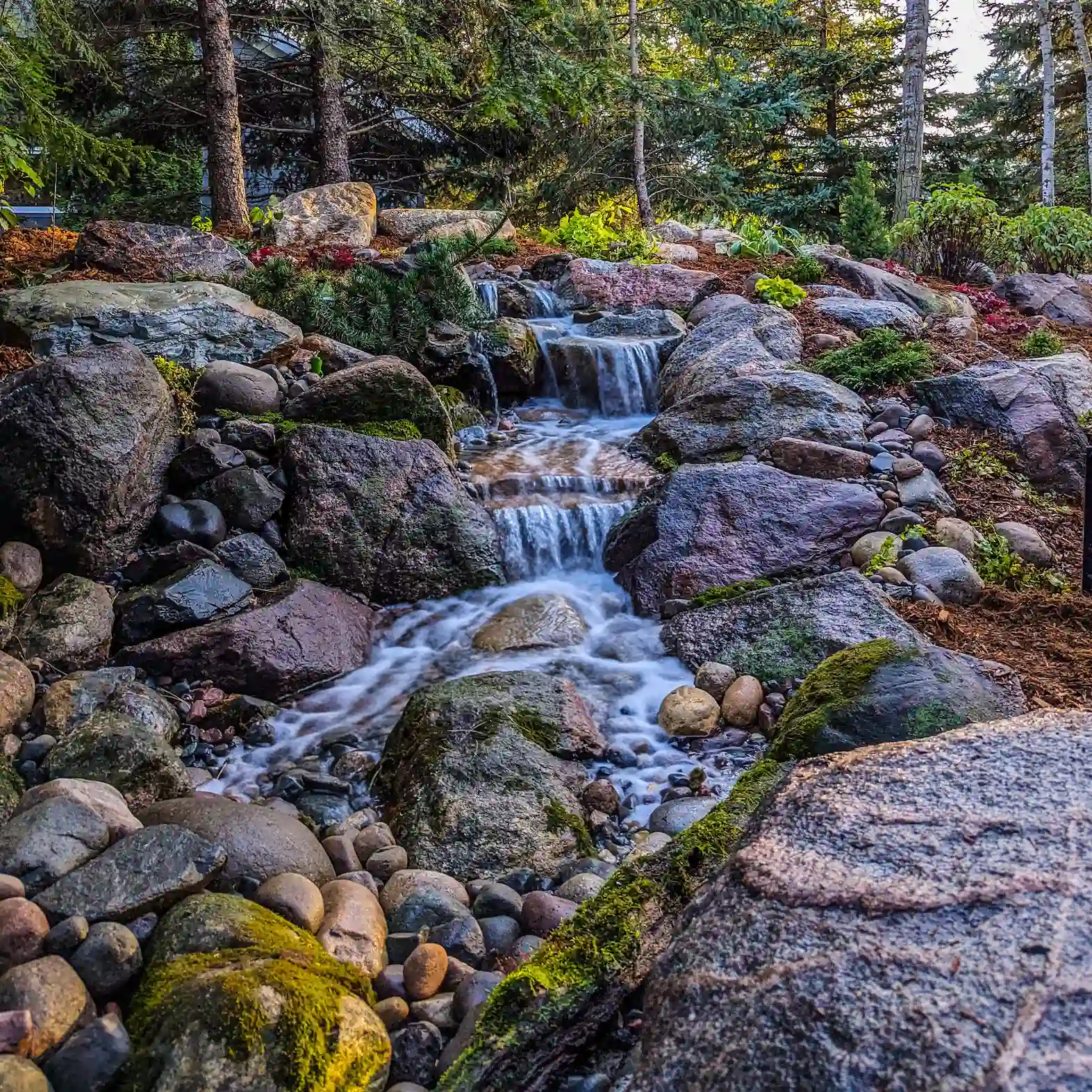
Butterflies gather at shallow pond edges. Bees drink from wet stones and plant roots. Birds bathe and return daily.
An ecosystem pond turns a garden from a food stop into a complete habitat.
How water improves plant health
Beyond wildlife, water benefits the garden itself:
- Raises local humidity during dry spells
- Moderates temperature around sensitive plants
- Stabilizes soil moisture
- Reduces plant stress
- Supports microbial life in surrounding soil
In other words, water becomes part of the growing system, not a decorative afterthought.
The calming power of running water
There is another benefit gardeners often mention after a water feature is installed, the sound.
The gentle movement of water creates natural white noise that:
- softens traffic and neighborhood sounds
- encourages people to slow down and linger in their garden
- reduces perceived stress
- supports relaxation and mental clarity
Many clients tell us their pond or waterfall becomes the place they go at the end of the day, coffee in the morning, a quiet moment after work, or a place to reconnect with nature when life feels busy. Plus, the grandkids love it!
It’s difficult to quantify, but easy to feel.
A healthy garden feeds the body.
A living water feature often feeds the nervous system too.

Ecosystem ponds vs decorative water features
Not all water features are equal.
At Pond King Water Gardens, we specialize in ecosystem ponds, systems designed to work with nature instead of against her.
That means:
- plants filter the water
- beneficial bacteria maintain clarity
- fish contribute to biological balance
- circulation replaces chemicals
- the pond matures and improves over time
It’s similar to how gardeners build soil health instead of relying on synthetic inputs.
A note about Minnesota gardens
Our climate makes this approach even more valuable:
- Short growing seasons
- Hot summer spikes
- Periodic drought
- Heavy spring runoff
- Long winters
Ecosystem ponds are designed to adapt through all of it, supporting wildlife during heat and drought, then resting naturally through winter dormancy.
If you’re curious about design or cost
Every property is different – slope, sun exposure, existing plants, soil conditions, and site access all matter when designing a water feature that functions well long-term. Also how you plan to use it and where you spend your time.
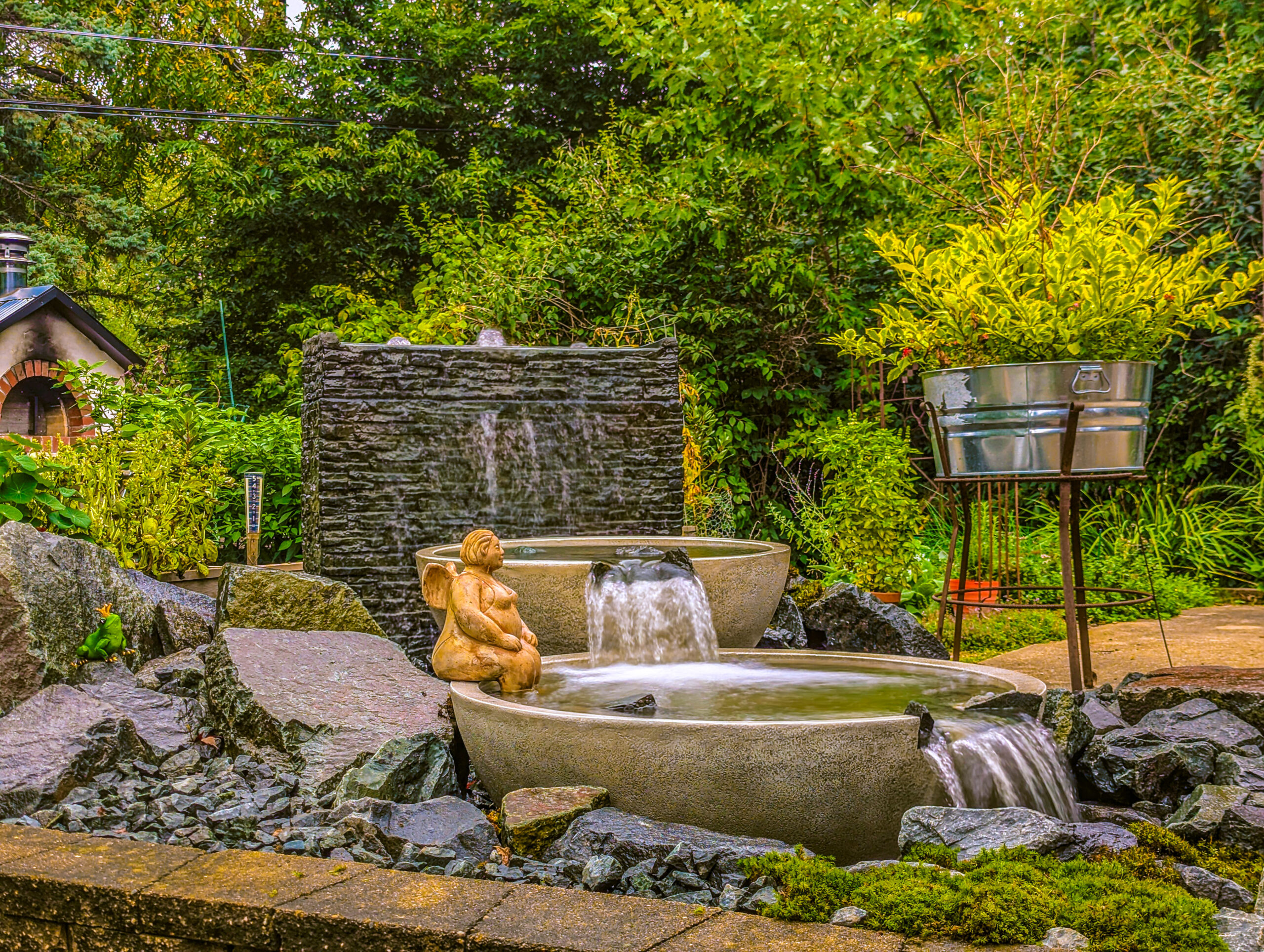
If you’d like to explore what an ecosystem pond, pondless waterfall, fountain, or fountainscape might cost for your space, you can visit our pricing page here:
👉 Water Feature Pricing & Options
You’ll find examples ranging from small garden features to large, immersive landscapes.

About our team
Pond King Water Gardens was founded in 2007 by Nick Needham, known to many clients as Nick “The Pond King.” Nick has been building water features for over 20 years and remains deeply involved in design and craftsmanship today.
Our team is:
- Master Certified Aquascape Contractors
- Award-winning designers
- Continuously trained through ongoing education
- Focused exclusively on ecological, low-chemical systems
That certification is similar in spirit to a Master Gardener program, advanced training, continued learning, and a commitment to best practices.
You can learn more about our story and our team here:
Looking for ideas?
Seeing different pond styles often helps gardeners imagine what might fit their own space.
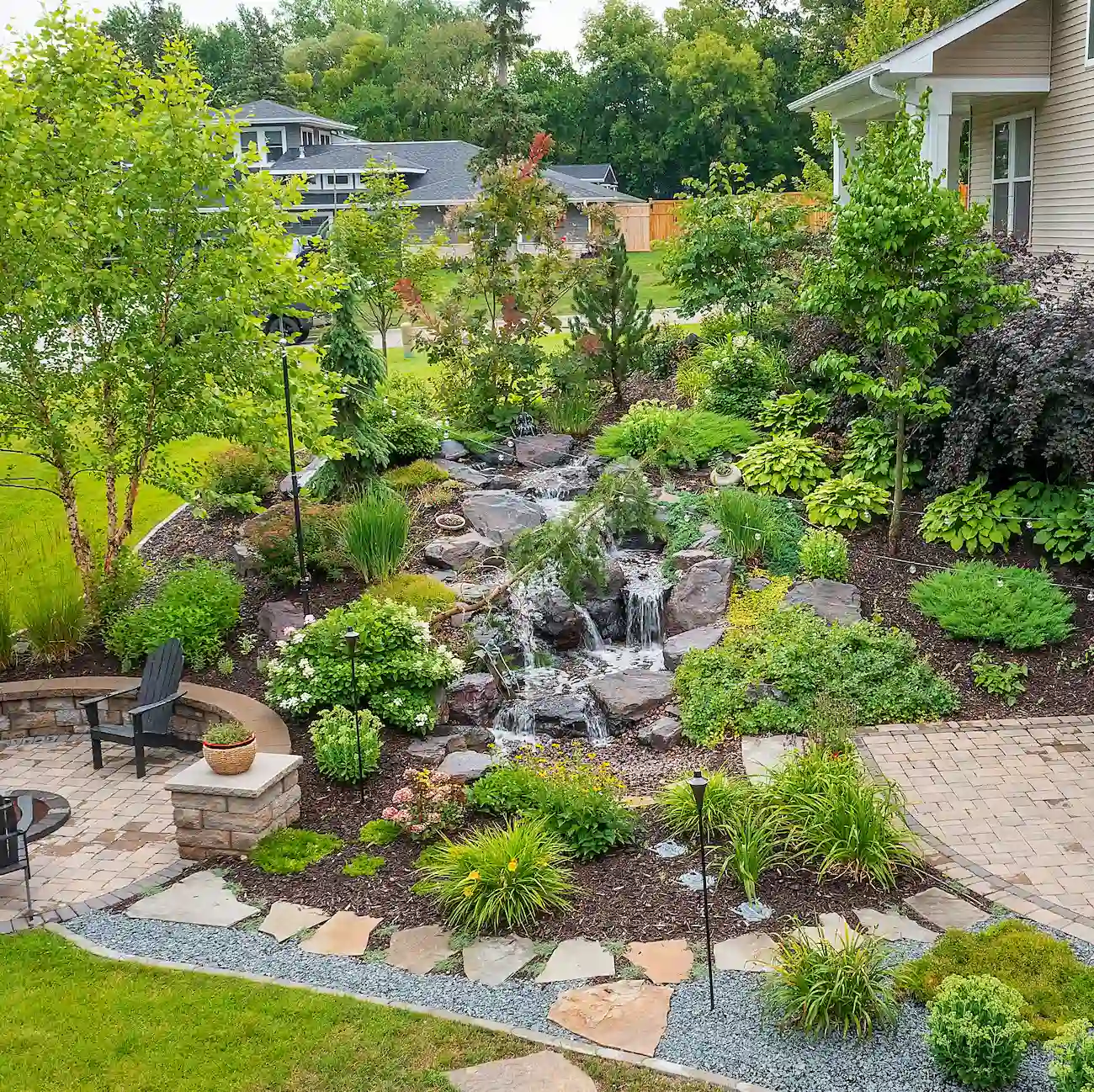
You can browse hundreds of completed ecosystem ponds, waterfalls, fountains, and fountainscapes here:
👉 View Our Water Feature Gallery
You can also view hundreds of our builds on your YouTube channel where we produce a video every week Thursday 7pm CST: https://www.youtube.com/@PondKingWaterGardensMN/videos
Final thoughts
Gardening is about more than plants.
It’s about building living systems that grow healthier over time.
When designed properly, ecosystem ponds:
- do not attract mosquitoes
- reduce pest pressure
- support pollinators
- strengthen plant health
- add calming sound and sensory balance
- and bring daily life into the garden
They become one more layer of balance in a landscape already shaped by thoughtful hands.
Ready to explore what’s possible?
If you’d like to talk through ideas for your garden, even just conceptually, we’re always happy to help.
👉 Contact Pond King Water Gardens
Whether you’re considering a small bubbling feature or a full ecosystem pond, we’re glad to answer questions and share what we’ve learned.